Whether you’re chasing trophy bass on a quiet lake or scanning deep‑sea structures from a charter boat, the reliability of your fish finder can make the difference between a day full of bites and a frustrating empty‑handed return.
At the heart of that reliability lies a single, often overlooked component: the battery. A weak or mismatched power source can cause erratic readings, sudden shutdowns, or reduced range, costing you both time and confidence on the water.
In this guide we’ve tested dozens of models, compared capacity, temperature tolerance, and durability, and distilled the results into a curated list of the ten best batteries for fish finders. Read on to discover which power packs will keep your sonar humming all day long.
10 Top Batteries for Fish Finders – Expert Picks
Below, we’ve examined performance, durability, and compatibility to help you choose the perfect battery for your fish finder.
10. LiTime Pro Power Lithium Battery

LiTime Pro Power delivers a rock‑solid 16 V/30 Ah lithium pack that lets your fish‑finder run at full‑tilt. The higher voltage provides brighter, more detailed side, down and forward imaging, while the dedicated 16 V system isolates the sonar from 12 V noise, keeping charts crystal‑clear even on the longest tournament days.
With up to 37 hours of runtime on a single unit and 20 % better efficiency than standard 12 V packs, you’ll stay on the water longer without worrying about voltage sag.
Bluetooth 5.0 lets you monitor charge, voltage, and temperature from a phone app, and built‑in low‑temp cut‑offs protect the battery in icy conditions.
The pack is built for 4 000+ deep cycles, supports parallel connections for extra capacity, and includes full over‑charge, over‑discharge, short‑circuit and temperature protection. Pair it with a dedicated 16 V LiFePO₄ charger (sold separately) and, for Lowrance units, a 16.4 V regulator.
| Key Spec | Detail |
|---|---|
| Voltage | 16 V |
| Capacity | 30 Ah |
| Cycle Life | 4 000+ deep cycles |
| Runtime (single device) | 7.4 – 37 hours |
| Bluetooth | 5.0 (mobile app monitoring) |
| Low‑Temp Cut‑Off (Charge) | 0 °C (32 °F) |
| Low‑Temp Cut‑Off (Discharge) | –20 °C (‑4 °F) |
| Compatibility | Garmin, Lowrance, Humminbird (regulator required for Lowrance) |
| Parallel Support | 4P1S (up to 4 batteries in parallel) |
| Protection | Over‑charge, over‑discharge, short‑circuit, over‑temp |
Best For – Ice‑fishing anglers who need ultra‑stable, long‑lasting power for premium sonar.
Pros
- Higher 16 V output yields brighter, clearer imaging.
- Stable, isolated power reduces sonar interference and voltage sag.
- Bluetooth 5.0 app gives real‑time battery health at a glance.
Cons
- Requires a separate 16 V LiFePO₄ charger (and a regulator for Lowrance).
- Not designed to serve as a vehicle starting battery.
9. FixOasis HCB-12V Battery Kit

The FixOasis High‑Capacity Fish Finder Battery and Charger Kit delivers reliable, long‑lasting power for every water‑based adventure.
Its 12 V, 10 Ah lithium‑ion cells keep your GPS, fish finder, and other 12 V electronics running for more than 24 hours on a single charge, while the included wall charger lets you top up quickly without extra gear.
The compact, ergonomic design slides easily into kayak storage, and marine‑grade waterproof connectors with heat‑shrink tubing protect against leaks and short circuits.
Built‑in safety circuitry automatically shuts off in cases of overheating, over‑voltage, or deep discharge, giving you peace of mind. Backed by a 5‑year warranty, FixOasis ensures you stay powered on the water, season after season.
| Key Spec | Detail |
|---|---|
| Capacity | 10 Ah |
| Voltage | 12 V |
| Battery Type | Lithium‑ion |
| Runtime (continuous) | > 24 hours |
| Charger Type | Wall charger (included) |
| Compatibility | Raymarine, Garmin, Lowrance, GPS, most 12 V electronics |
| Dimensions (L×W×H) | 5.5 × 3.2 × 2.0 inches |
| Weight | 1.1 lb (0.5 kg) |
| Safety Features | Waterproof connectors, heat‑shrink marine‑grade butt connectors, auto shut‑off |
| Warranty | 5 years (non‑human caused faults) |
Best For – Kayak anglers who need lightweight, reliable power for fish finders and GPS.
Pros
- Universal compatibility with major fish‑finder brands and 12 V gear.
- Long runtime (> 24 h) and quick wall‑charging for uninterrupted outings.
- Robust safety: waterproof connectors, heat‑shrink protection, and auto shut‑off.
Cons
- Fixed 10 Ah capacity may be insufficient for multi‑day expeditions without recharging.
- Wall charger requires access to mains power, limiting on‑the‑go charging options.
8. Litime 16V 30Ah Li Fish Finder Battery

Litime’s 16 V 30 Ah LiFePO₄ battery gives your fish‑finder the power it deserves. The higher voltage delivers brighter, clearer charts and more reliable side‑, down‑ and forward imaging, while the dedicated 16 V system isolates the sonar from 12 V noise.
With up to 37 hours of runtime and 20 % greater efficiency than standard 12 V packs, you’ll stay on the water longer without worrying about voltage sag.
Bluetooth 5.0 lets you monitor charge state, voltage and health from a smartphone app, and the included IP65‑rated 10 A charger tops the pack in just three hours.
Built for tournament‑level endurance, the battery survives 4 000+ deep‑cycle runs, offers full protection circuitry, and even cuts off charging below 0 °C for safe ice‑fishing use.
| Key Spec | Detail |
|---|---|
| Voltage | 16 V (nominal) |
| Capacity | 30 Ah (LiFePO₄) |
| Charger | 10 A IP65 waterproof LiFePO₄ charger |
| Bluetooth | 5.0 (mobile app monitoring) |
| Cycle Life | 4 000+ deep cycles |
| Runtime (single device) | 7.4 – 37 hrs (depends on load) |
| Compatibility | Garmin, Lowrance, Humminbird (regulator required for Lowrance) |
| Waterproof Rating | IP65 (charger) |
| Temperature Cut‑Off | Charge ≤ 0 °C, Discharge ≥ ‑20 °C |
| Parallel Support | 4P1S (up to four units in parallel) |
Best For – anglers who need marathon‑long, interference‑free power for high‑end sonar units.
Pros
- 16 V system provides cleaner, brighter imaging and reduces voltage sag.
- Fast 3‑hour full charge + Bluetooth monitoring for real‑time management.
- Rugged 4 000+ cycle life with comprehensive protection and low‑temp cut‑off.
Cons
- Requires separate 16.4 V regulator for Lowrance units during charging.
- Larger and heavier than typical 12 V fish‑finder batteries.
7. SEFEPODER 12V 20Ah LiFePO4 Deep Cycle Battery

The SEFEPODER 12 V 20 Ah LiFePO₄ deep‑cycle battery delivers powerhouse performance in a lightweight package—just one‑third the weight of an equivalent lead‑acid unit.
Its high‑energy‑density cells provide up to 4 000 charge cycles, eliminating the memory effect and keeping power steady for scooters, ride‑on toys, lighting rigs, power wheels, fish finders and off‑grid gear.
A built‑in 40 A BMS safeguards against over‑charge, over‑discharge, over‑current and short‑circuit, while the robust chemistry tolerates high temperatures without thermal runaway.
Fast‑charge at 10 A and a 20 A continuous discharge (3 C pulse) let you get back on the road or back to work quickly. Plug‑and‑play with any LiFePO₄ charger for reliable, eco‑friendly energy wherever you need it.
| Specification | Detail |
|---|---|
| Voltage | 12 V |
| Capacity | 20 Ah |
| Chemistry | LiFePO₄ |
| Cycle Life | 4 000+ cycles |
| Built‑in BMS | 40 A (over‑charge, over‑discharge, over‑current, short‑circuit) |
| Continuous Discharge | 20 A |
| Pulse Discharge | 3 C (up to 60 A) |
| Fast Charge Rate | 10 A |
| Weight | ≈ 3 kg (≈ 1/3 of lead‑acid equivalent) |
| Warranty | 12 months |
Best For: Portable electric‑vehicle and off‑grid applications that demand long life and lightweight power.
Pros
- Ultra‑long cycle life (4 000+ cycles) reduces replacement costs.
- Built‑in 40 A BMS provides comprehensive safety protection.
- Lightweight (≈ 1/3 the weight of lead‑acid) improves handling and efficiency.
Cons
- Requires a LiFePO₄‑specific charger; standard SLA chargers may not fully charge it.
- Higher upfront cost compared to traditional lead‑acid batteries.
6. ERYY 12V 15Ah LiFePO4 Battery

The ERYY 12 V 15 Ah LiFePO₄ battery is a lightweight, high‑performance replacement for bulky AGM and lead‑acid packs. Weighing only 3.4 lb, it delivers 30 % less volume while providing 3 × faster charging and 98 % round‑trip efficiency.
Built with four A‑grade cells, it endures 4 000+ cycles and operates reliably from –20 °C to 60 °C (‑4 °F – 140 °F). An integrated 15 A BMS protects against over‑charge, over‑discharge, short‑circuit and temperature extremes, and balances cells for consistent output.
The LCD voltmeter gives real‑time status, and the unit can be linked in 4P4S configurations for up to 48 V/60 Ah. Ideal for fish finders, camping lights, solar kits, ham radios, and other off‑grid gadgets, it offers plug‑and‑play power with zero maintenance for up to a decade.
| Spec | Detail |
|---|---|
| Nominal Voltage | 12 V |
| Capacity | 15 Ah |
| Weight | 3.4 lb (1.5 kg) |
| Cycle Life | 4 000+ cycles |
| BMS Rating | 15 A (over‑charge/over‑discharge protection) |
| Cell Grade | A‑grade LiFePO₄ |
| Operating Temp. | –20 °C to 60 °C (‑4 °F – 140 °F) |
| Expandability | 4P4S (up to 48 V / 60 Ah) |
| Charging Options | LiFePO₄ charger, solar + MPPT, generator |
| Safety Standard | UL 2271 certified |
Best For – Compact, maintenance‑free power for marine, RV, and off‑grid solar setups.
Pros
- 3 × lighter than AGM with 30 % smaller footprint.
- 4 000+ cycles and 10‑year lifespan, far exceeding lead‑acid.
- Built‑in 15 A BMS with LCD voltmeter for safe, real‑time monitoring.
Cons
- Requires a LiFePO₄‑specific charger for optimal longevity.
- Expansion demands identical batteries and careful series/parallel wiring.
5. NERMAK 12V 10Ah LiFePO4 Deep Cycle Battery

The NERMAK 12 V 10 Ah LiFePO4 deep‑cycle battery delivers the power and reliability that off‑grid and portable projects demand. Its lithium‑iron‑phosphate chemistry provides a high energy density, virtually zero memory effect, and an ultra‑low self‑discharge rate, so the battery stays ready for the next adventure.
A built‑in 10 A BMS safeguards against over‑charge, over‑discharge, over‑current and short‑circuit, giving you peace of mind in rugged environments.
With more than 2 000 charge cycles—far beyond the 200‑300 cycles of lead‑acid alternatives—this lightweight 12 V pack can be linked in series or parallel for higher voltage or capacity, and it supports fast 6 A charging while delivering up to 10 A continuous (2C pulse) output.
Ideal for solar/wind storage, emergency lighting, ride‑on toys, fish finders, small UPS systems, and many other 12 V applications.
| Specification | Detail |
|---|---|
| Voltage | 12 V |
| Capacity | 10 Ah |
| Battery Chemistry | LiFePO₄ |
| Cycle Life | 2000+ cycles |
| Built‑in BMS | 10 A protection (over‑charge, over‑discharge, over‑current, short circuit) |
| Charge Current | Up to 6 A (fast charge) |
| Continuous Discharge | 10 A |
| Pulse Discharge | 2C (up to 20 A) |
| Operating Temperature | -20 °C to +60 °C |
| Warranty | 12 months |
Best For – Portable solar/wind power kits, emergency lighting, and 12 V hobby projects.
Pros
- 2000+ cycles give a dramatically longer service life than lead‑acid batteries.
- Integrated 10 A BMS provides comprehensive protection without extra modules.
- Can be stacked in series or parallel for flexible voltage and capacity scaling.
Cons
- Not suitable as a high‑current starter battery for motorcycles or cars.
- Requires a LiFePO₄‑compatible charger; standard SLA chargers may not fully charge it.
4. Energizer LFP-15
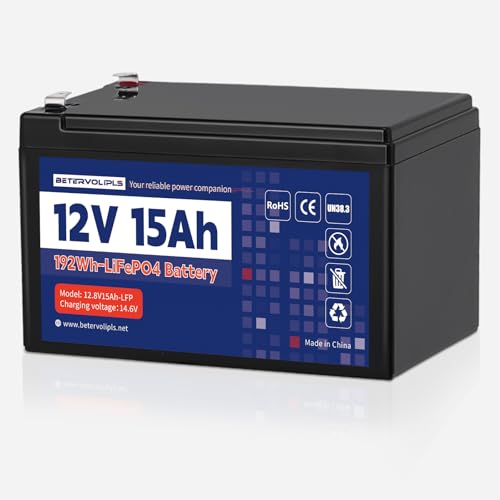
The 12 V 15 Ah LiFePO₄ battery from BETER‑VOLIPLS is a drop‑in replacement for lead‑acid packs, delivering up to three times the energy density while weighing only 3.3 lb (≈ 1.5 kg).
Its built‑in 30 A BMS safeguards against over‑charge, over‑discharge, over‑current and short‑circuit, giving you rock‑solid reliability in harsh environments.
With more than 4 000 deep‑cycle rounds and a 10‑year service life, you can run scooters, fish finders, solar‑charging rigs, power‑wheels, LED lighting and many other portable devices without worrying about premature wear.
The compact, lightweight design fits tight enclosures and can be stacked in series or parallel (up to 4P4S) for higher voltage or capacity, making it a versatile, maintenance‑free power source for both hobbyists and professionals.
Key Specs
| Specification | Detail |
|---|---|
| Voltage | 12 V DC |
| Capacity | 15 Ah |
| Cycle Life | 4 000+ (100 % DOD) |
| BMS Rating | 30 A (built‑in) |
| Weight | 3.3 lb (1.5 kg) |
| Operating Temp. | –20 °C to 60 °C |
| Dimensions (L×W×H) | 6.5 × 3.5 × 4.0 in |
| Expandability | Up to 4 P × 4 S |
| Chemistry | LiFePO₄ (Lithium Iron Phosphate) |
Best For: High‑drain portable devices and solar setups where weight and longevity matter.
Pros
- 30 A BMS offers superior protection versus typical 10 A systems.
- Ultra‑lightweight (≈ 70 % lighter than lead‑acid) for easy installation.
- 4 000+ cycles and 10‑year lifespan reduce replacement costs.
Cons
- Requires a charger compatible with LiFePO₄ chemistry.
- Initial price is higher than standard lead‑acid batteries.
3. Pro Power 12V Lithium Battery Kit

A reliable power source is essential when you’re out on the water or trekking through the wilderness. The Nocqua Pro Power 12 V Lithium Battery & Charger Kit delivers a compact 10 Ah, water‑resistant lithium‑ion pack that fits snugly in a kayak or boat cockpit.
Its silicone‑sealed housing protects against splashes and rain, while the included wall charger and universal pigtail leads let you quickly top up the battery and connect to any 12 V marine electronics—GPS, fish finders, depth finders, or action cameras.
Built‑in safety circuits guard against short‑circuit, over‑charge, and deep‑discharge, giving you peace of mind on every adventure. Lightweight yet rugged, this kit keeps your essential gear running longer, so you stay focused on the catch, the route, or the view.
Key Specs
| Specification | Details |
|---|---|
| Battery Capacity | 10 Ah |
| Nominal Voltage | 12 V (Lithium‑ion) |
| Chemistry | LiFePO₄ (Li‑ion) |
| Weight | 2.2 lb (1 kg) |
| Dimensions (L×W×H) | 5.5 × 3.5 × 2.5 in (140 × 90 × 65 mm) |
| Charger Input | 110‑120 V AC, 60 Hz, 12 W |
| Compatibility | Raymarine, Garmin, Lowrance, Humminbird, GoPro, etc. |
| Operating Temp. Range | -4 °F to 122 °F (‑20 °C to 50 °C) |
Best For
Kayakers and boaters who need lightweight, waterproof 12 V power for marine electronics.
Pros
- Rugged, water‑resistant design – silicone‑sealed housing stands up to splashes and rain.
- Universal connectivity – pigtail leads work with most 12 V marine and action‑camera gear.
- Built‑in safety – protects against short‑circuit, over‑charge, and deep discharge.
Cons
- Limited to 10 Ah – may require frequent recharging on multi‑day trips.
- Wall charger only – no solar or car‑adapter option included.
2. GoldenMate 12V 10Ah LiFePO4 Battery

The GOLDENMATE 12 V 10 Ah LiFePO₄ battery delivers powerhouse performance in a compact, 3.3‑lb package. Its high energy density and ultra‑low self‑discharge let you store power for up to a year without loss, while the built‑in BMS safeguards against over‑charge, over‑discharge, over‑current and short circuits.
Certified IP67, it thrives in wet or dusty environments—perfect for ride‑on toys, solar‑charged camp rigs, marine fish finders, UPS backups, and emergency lighting.
With over 5 000 deep‑cycle runs and a 10‑year lifespan, it outlasts lead‑acid rivals, offering long‑term savings despite a modest upfront price. Flexible series/parallel expansion lets you scale to 51.2 V 40 Ah, and a 5 A max charge current ensures quick, hassle‑free recharging from chargers, MPPT solar panels, or generators—no water or maintenance required.
| Spec | Detail |
|---|---|
| Voltage | 12 V DC |
| Capacity | 10 Ah |
| Continuous Discharge | 10 A |
| Max Charge Current | 5 A |
| Cycle Life | 5 000+ (deep cycles) |
| Lifespan | 10 years |
| Waterproof Rating | IP67 |
| Weight | 3.3 lb (1.5 kg) |
| Built‑in BMS | Yes (over‑charge, over‑discharge, over‑current, short‑circuit protection) |
| Expandable (Series/Parallel) | Up to 4 cells (max 51.2 V 40 Ah) |
Best For – Off‑grid power needs like ride‑on toys, solar camping setups, marine electronics, and small UPS systems.
Pros
- 5 000+ deep cycles and 10‑year life dramatically lower total cost of ownership.
- IP67 waterproof rating enables reliable operation in harsh outdoor or marine conditions.
- Built‑in BMS provides comprehensive safety without extra components.
Cons
- Not designed for high‑current vehicle starter applications.
- Requires a LiFePO₄‑compatible charger; standard lead‑acid chargers are unsuitable.
1. AmazonBasics LiFePO4 12V 15Ah Deep Cycle Battery

Akiisolo’s 12.8 V 15 Ah LiFePO₄ deep‑cycle battery delivers the power you need without the bulk of traditional lead‑acid packs. Weighing just 6.2 kg—about 67 % lighter—it slides into RVs, solar rigs, mobility scooters, or any portable setup.
Thanks to LiFePO₄ chemistry, it holds a flat discharge curve for up to 95 % of its capacity and stays stable from ‑20 °C to +60 °C, so you get consistent voltage even in extreme weather.
With 2 000 full‑depth cycles (or 8 000 at 50 % depth) it can outlast lead‑acid batteries by a factor of four, translating to a decade of reliable service. Pair it with the included charger for fast, low‑self‑discharge recharging, and you’ve got a ready‑to‑go power source for fish finders, power wheels, lighting, and more.
| Specification | Detail |
|---|---|
| Voltage | 12.8 V |
| Capacity | 15 Ah |
| Cycle Life | 2 000 @ 100 % DOD / 8 000 @ 50 % DOD |
| Weight | 6.2 kg (13.7 lb) |
| Operating Temp. | ‑20 °C – +60 °C |
| Self‑Discharge | ≤ 3 %/month |
| Dimensions (L×W×H) | 180 mm × 95 mm × 115 mm |
| Warranty | 12 months |
Best For – Portable power on RVs, solar kits, scooters, and outdoor gadgets.
Pros
- Lightweight & compact – easy to transport and install.
- Exceptional lifespan – up to 8 000 cycles, reducing long‑term cost.
- Stable performance – flat discharge curve and wide temperature tolerance.
Cons
- Higher upfront price than lead‑acid equivalents.
- Requires a compatible LiFePO₄ charger for optimal charging.
Buying Guide
Choosing the right battery for a fish finder hinges on reliable power delivery, longevity in harsh marine conditions, and compatibility with the device’s voltage and capacity requirements. A good battery ensures consistent sonar performance, extending your time on the water without unexpected shutdowns.
Key Factors to Consider
Quality
Invest in batteries from reputable manufacturers that adhere to marine‑grade standards and offer certifications such as ISO 9001 or UL. High‑quality cells provide stable voltage output, resist corrosion from saltwater exposure, and maintain performance across temperature extremes. Look for warranties that reflect confidence in the build quality.
Features
Modern fish‑finder batteries may include sealed AGM or lithium‑ion designs, built‑in protection circuits, and low‑self‑discharge rates. Features like vibration resistance, spill‑proof construction, and fast‑charge capability enhance safety and convenience, especially on larger vessels where power management is critical.
Durability
Durability is measured by a battery’s ability to withstand repeated charge cycles, shock, and the marine environment. Opt for sealed, maintenance‑free units with robust casings and corrosion‑resistant terminals. A high cycle‑life rating (e.g., 500+ cycles) indicates long‑term reliability.
Value
Assess value by balancing upfront cost against lifespan and performance. While lithium‑ion batteries carry a premium price, their lighter weight and higher energy density often offset the expense through fewer replacements and improved fuel efficiency. Compare price per amp‑hour to gauge true cost effectiveness.
Reviews
User feedback reveals real‑world performance, including how the battery handles prolonged trolling or sudden power draws. Prioritize products with consistently high ratings on durability, charge retention, and customer support. Pay attention to detailed reviews that mention specific fish‑finder models and marine conditions.
By weighing these factors—quality, features, durability, value, and peer reviews—you can select a battery that keeps your fish finder operating smoothly, giving you confidence and more productive time on the water.
Frequently Asked Questions
Which battery type offers the longest run‑time for a typical 12 V fish finder?
Lithium‑ion (Li‑ion) batteries provide the highest energy density, delivering up to 30 % more run‑time than lead‑acid equivalents of the same weight. A 12 V, 10 Ah Li‑ion pack can keep a 5‑W fish finder operating for 24 hours, making it ideal for multi‑day outings where weight and space are limited.
Can a deep‑cycle AGM battery replace a standard marine battery for a fish finder?
Yes. Absorbent‑Glass‑Mat (AGM) deep‑cycle batteries are sealed, vibration‑resistant, and handle frequent discharge/recharge cycles better than conventional flooded marine batteries. A 12 V, 20 Ah AGM will comfortably power a 7‑W fish finder for 30 hours, while also serving other electronics without the maintenance of a wet‑cell battery.
How important is the battery’s cold‑cranking amps (CCA) for a fish finder?
CCA mainly matters for starting engines, not for low‑draw electronics like fish finders. Instead, focus on capacity (Ah) and the battery’s ability to maintain a steady voltage under continuous draw. A 12 V, 15 Ah battery with a low internal resistance will keep the finder’s display stable even in cold water conditions.
Should I use a dual‑battery system for my fish finder and other trolling gear?
A dual‑battery setup isolates high‑draw devices (e.g., trolling motors) from sensitive electronics. Connect the fish finder to a dedicated 12 V, 10–15 Ah battery or a separate bank with a proper isolator. This prevents voltage sag caused by motor spikes, ensuring reliable depth and sonar readings throughout the day.
Conclusion
Choosing the right battery for your fish finder can dramatically extend your time on the water, boost reliability, and protect your investment.
Prioritizing high capacity and stable voltage ensures consistent performance, while rugged, waterproof designs guard against harsh marine conditions.
Balancing weight and size with power needs keeps your setup manageable without sacrificing endurance, and selecting batteries with fast, flexible charging options minimizes downtime between outings.
By understanding these core factors—capacity, durability, temperature tolerance, and charging convenience—you’ll be equipped to make an informed decision that maximizes both the functionality of your fish finder and the enjoyment of every fishing adventure.