
Fishing › Guides › Lighted Lures in Weeds and Docks
You can light up a lure in three ways: use a built-in LED lure, charge glow-in-the-dark plastics or paint with a UV flashlight, or add glow beads, glow blades or reflective tape to a lure you already trust. In weeds, put that light on a weedless rig like a Texas-rigged glow worm or a hollow-body frog so it comes through cover cleanly. Around docks, fish the light along shade lines, pilings and dock-light edges where baitfish gather after dark.
Key takeaways
- Lighting a lure means adding an LED, glow material or reflective finish so fish can find it in low light or dirty water.
- Most LED lures carry treble hooks, so in weeds, use glow soft plastics, glow beads or glow skirts on weedless hooks.
- At docks, work the edge where light meets shadow, plus pilings and dock corners, because predators hold there to ambush bait.
- Glow finishes fade within minutes, so recharge with a UV light often, and check local rules on lights and night fishing.
In this guide
- What It Means to Light a Lure
- How to Lighten Lures for Fishing in Weeds
- Best Lighted Rigs for Thick Cover
- How to Fish Lighted Lures Around Docks
- Choosing Color and Brightness by Water Clarity
- Seasonal, Regional and Legal Notes
- Common Mistakes and Night Safety
What It Means to Light a Lure
A lighted lure is any bait that gives off or reflects light so fish can track it in darkness, deep water or murky conditions. Some lures have a built-in LED that turns on when the lure hits the water. Others are made of phosphorescent plastic or paint that soaks up light and slowly glows it back.
A third option is reflective or UV-reactive finishes. These don’t glow in total darkness, but they catch moonlight, dock lights and the little light that reaches deep water. Many anglers combine two methods, like a glow worm with a reflective blade above it.
Which one you pick depends on where you fish. Open water lets you throw almost anything. Weeds and docks are harder because hooks snag and lures get knocked around, so the light source has to fit a rig that can handle cover. If you want to compare options before you buy, our roundup of the best lighted lures for fishing covers the main styles.
Ways to light up a lure
| Method | How it works | Good in weeds? | Good at docks? |
|---|---|---|---|
| Built-in LED lure | Battery light, often water-activated | Poor, usually treble hooks | Good on open edges |
| Glow soft plastics | Charge with UV or bright light, glows for minutes | Excellent on weedless hooks | Excellent |
| Glow beads or pegs | Add glow above a weedless hook | Excellent | Excellent |
| Glow or UV paint | Brush onto jig heads, spoons, blades | Good | Good |
| Reflective tape or blades | Bounces available light | Fair | Very good under dock lights |
| Clip-on LED or light stick | Attaches to line or leader | Fair, can snag | Good for vertical fishing |
How to Lighten Lures for Fishing in Weeds
Weeds trap hooks, so the trick is putting the light on something that slides through vegetation. Exposed trebles hanging off an LED crankbait will pick up grass on almost every cast. Instead, build your light into a weedless setup.
The simplest way is a glow soft plastic on an offset worm hook, rigged Texas style with the point buried back into the bait. Add a glow bead between the bullet weight and the hook for extra light and a little clicking sound. Charge everything before the cast and it will glow as it drops into holes and along weed edges.
You can also brush glow paint onto a jig head or weedless jig, or swap in a glow skirt. Keep the paint off the hook point and eye so it doesn’t affect penetration or your knot. Let painted heads dry fully before fishing them, or the finish can chip off in the first few casts through grass.
Rig a glow Texas rig for weeds
- Pick the weightUse a bullet weight just heavy enough to get through the cover, often 1/8 to 3/8 oz in sparse weeds and heavier for thick mats.
- Add a glow beadThread a glow bead on the line under the weight to protect the knot and add a light point.
- Tie on a weedless hookAn offset worm hook or EWG hook matched to the bait size works well.
- Rig the plasticInsert the hook, bring it out, flip it and bury the point just under the plastic’s skin.
- Charge itHit the bait and bead with a UV flashlight for a few seconds, or hold them under a bright light.
- Cast to edges and holesFish openings, weed lines and points, and recharge every few casts as the glow fades.
Best Lighted Rigs for Thick Cover
Not every weed bed is the same. Sparse grass, thick mats and lily pads each call for a slightly different setup, but every one of them can carry some kind of light.
Remember that glow plastics are brightest right after charging and fade within a few minutes. In weeds, you’ll usually catch more by making shorter, targeted casts and recharging often than by making long casts across a whole bed.
Tip: If you love an LED lure but fish weedy water, throw it parallel to the outside weed line instead of over the grass. Switch to a glow Texas rig when you need to get into the cover itself.
Sparse grass and weed edges
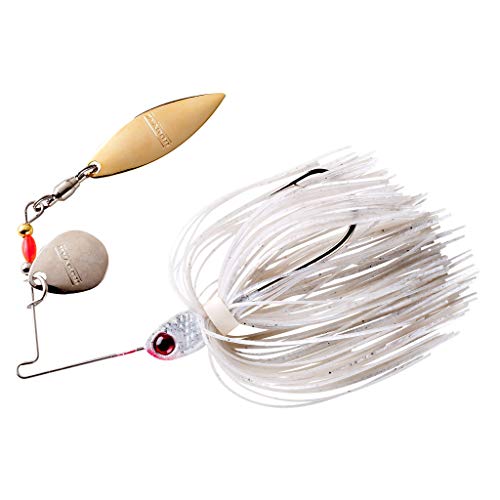
A glow worm on a light Texas rig or a weightless wacky rig works well along the outside edge of grass. A spinnerbait with a glow skirt or painted blade also comes through scattered weeds because the wire arm shields the hook.
Matted weeds and pads
Hollow-body frogs are the classic choice here because their hooks ride against the body. Some come in glow colors, or you can add glow paint to the belly. A heavy punch rig with a glow creature bait and a glow bead can push through mats into the shaded water below.
Deep weed lines
A weedless jig with a glow skirt or painted head lets you work the bottom edge of a weed line slowly. In stained water, a reflective blade on a bladed jig adds flash that fish can see, plus vibration they can feel through their lateral line.
How to Fish Lighted Lures Around Docks
Docks are some of the best spots to fish a lighted lure. They give shade by day, and many have lights at night that draw insects and plankton, which bring in baitfish, which pull in bass, crappie, catfish and many saltwater species.
The most productive zone is usually the edge where the light fades into darkness. Predators often hold in the shadow and dart out to grab bait in the lit water. Cast past that edge and bring your lure across it.
At night, a glow or LED lure helps fish find your bait in the dark part of the water. Under bright dock lights, reflective finishes and natural colors can work better than a strong glow, because the area is already lit.
Dock night-fishing quick check
- Charged glow baits or fresh LED batteries
- UV flashlight for recharging
- Headlamp with a red light mode
- Weedless hooks and glow beads
- Abrasion-resistant line or leader for pilings
- Permission to fish the dock, or public access confirmed
- PFD if fishing from a boat or kayak
Targets to hit
Work pilings, corners, boat lifts, floating dock edges and any brush or weeds near the dock. Skip soft plastics under low docks during the day, and switch to glow versions as the light drops.
Vertical fishing
For crappie and panfish, drop a small glow jig straight down beside pilings or under lights. A clip-on light or a submersible fishing light near the dock can also concentrate bait if local rules allow it. Our guide to lures for pond fishing covers small baits that fit this approach well.
Choosing Color and Brightness by Water Clarity
Water filters light quickly, and some colors fade faster than others. Red light disappears in the first few feet, while blue and green carry farther. That’s why most glow lures come in green or blue and why chartreuse is a common pick in stained water.
More light isn’t always better. In clear water on a calm night, a soft glow or a lightly charged bait can look more natural than a blazing one. In muddy water, brighter glow plus vibration from a blade or rattle gives fish more ways to find the lure.
Try a short test. Charge a bait fully, fish it for a few casts, then try a half charge. If fish only hit the dimmer version, they want subtle.
Moon phase matters too. On a bright full moon, fish can see silhouettes well, so a dark bait with a small glow accent often works. On a new moon or overcast night, lean on brighter glow and more noise.
Lighted lure color and brightness by water clarity
| Water condition | Light level | Suggested colors | Brightness |
|---|---|---|---|
| Clear, moonlit night | Low | Natural, pale green glow | Soft, partial charge |
| Clear, dark night | Very low | Green or blue glow | Medium |
| Stained water | Low to moderate | Chartreuse, green glow | Full charge |
| Muddy water | Any | Chartreuse, white glow plus rattles or blades | Full charge, recharge often |
| Under bright dock lights | Lit area | Reflective, natural baitfish tones | Little or no glow needed |
| Deep water by day | Dim | Blue or green glow, UV finishes | Medium to full |
Seasonal, Regional and Legal Notes
Lighted lures shine in summer, when many fish feed more at night to avoid heat and boat traffic. Weed beds are also at their thickest then, so weedless glow rigs earn their keep. In spring and fall, dusk and dawn often beat the middle of the night.
In cold water, fish move slower, so a glow jig worked slowly near docks or deep weed edges is a good fit. Ice anglers use glow jigs a lot for the same reason: it’s dark under the ice.
In saltwater, dock lights are famous for drawing in bait, and glow or reflective lures can work well around them. Rinse lures and hooks after each trip because salt speeds up corrosion. Catfish anglers in rivers and lakes also use glow beads and lighted rigs at night, and our roundup of fishing lures for catfish has options that fit this approach.
Rules vary by state and water body. Some places limit artificial lights for fishing, night fishing hours, or the number of hooks per lure. Always check your local fishing regulations before you head out.
Safety note: Many docks are private property. Never fish from or tie up to a private dock without permission, and keep a respectful distance from docks with people on them, especially at night.
Common Mistakes and Night Safety
The most common mistake is forgetting to recharge glow baits. Most phosphorescent plastics are brightest for the first minute or two, then dim quickly. Recharge every few casts, especially in weeds where you’re making short presentations.
Another mistake is throwing treble-hooked LED lures into thick weeds or tight against docks. You’ll spend more time pulling grass and losing lures than fishing. Match the lure to the cover.
Some anglers also blast the water with a white headlamp. Bright light can spook fish in shallow water and ruins your night vision. Use a red light setting when you can, and point the beam away from the water you’re fishing.
For safety, fish with a buddy at night when possible, and tell someone where you’ll be. Wear a PFD on boats and kayaks, and make sure your boat has working navigation lights as required. Walk docks carefully, since wet boards and loose planks are easy to trip on in the dark. Carry pliers or a hook remover, and check that batteries in LED lures are sealed and dry before storing them.
Before you leave the water
- Remove spent batteries or switch off LED lures if possible
- Rinse saltwater gear with fresh water
- Let glow plastics dry before storing them in a box
- Pack out all line, hooks and wrappers
- Check dock and shoreline for lost tackle
Gear that helps

Our guide
6 Best Lighted Lures for Fishing
Compares the main LED and glow lure styles so you can pick one that fits weeds or docks.
Our guide
6 Best Lures for Pond Fishing
Covers small, weed-friendly baits that pair well with glow beads and plastics in weedy ponds.

Our guide
9 Best Fishing Lures for Catfish
Catfish are a top night target around docks, and this roundup lists baits that work with lighted rigs.
Questions
Can you use lighted lures for fishing in weeds?
Yes, but choose the right style. LED lures with treble hooks snag easily, so use glow soft plastics on weedless hooks, glow beads, glow-skirted jigs or frogs instead. Fish weed edges, holes and pockets, and recharge glow baits often.
Can you use lighted lures for fishing docks?
Yes, docks are one of the best places to use them. Work the edge between dock light and shadow, plus pilings and corners. Glow baits help after dark, while reflective finishes often work better right under bright dock lights.
How do I make a lure glow?
Use glow-in-the-dark soft plastics, glow paint or glow beads, and charge them with a UV flashlight or bright light for a few seconds. The glow fades within minutes, so recharge every few casts. You can also add reflective tape or blades for flash.
How long does a glow lure stay bright?
Most glow finishes are brightest for the first minute or two and then dim steadily, though a faint glow can last longer. Brands and materials vary. A small UV flashlight makes recharging quick and easy.
Are lighted lures legal everywhere?
Not always. Rules on artificial lights, night fishing hours and hook counts vary by state and water body. Check your local fishing regulations before using lighted lures or submersible lights.
Update log
Rewritten and expanded: clearer answers, 7 visual summaries, FAQ and related gear guides.


