
Hunting › Guides › Boat Hunting Safety
The most important precaution when hunting from a boat is to wear a properly fitted life jacket the whole time and never move around with a loaded gun. Most serious boat hunting accidents start with a small boat capsizing or swamping in cold water, not with a stray shot. Stay seated to shoot, stay under the capacity plate, and leave a float plan with someone on shore.
Key takeaways
- Wear your life jacket the whole time. In cold water you usually won’t have time to find one and put it on.
- Read the capacity plate, then count hunters, dog, decoys, guns and gear against it, and keep the load low and centered.
- Unload every firearm before the motor starts. Under federal rules for migratory birds, you can only shoot once the motor is off and the boat has stopped moving.
- Know the 1-10-1 rule for cold water, and always leave a float plan with someone on shore.
In this guide
- Why Hunting From a Boat Is Riskier Than It Looks
- Before You Launch: Gear and Boat Checks
- Don’t Overload: Capacity, Weight and Balance
- Firearm Safety on the Water
- Wear the Right Life Jacket, the Whole Time
- If You Go Into Cold Water: The 1-10-1 Rule
- Weather, Float Plans and Staying Sharp
Why Hunting From a Boat Is Riskier Than It Looks
Duck hunters, sea duck hunters and anyone who reaches a hunting spot by water usually go in the worst boating conditions of the year. Mornings are dark, the water is cold, the wind picks up after sunrise, and the boats are often small, flat-bottomed and loaded heavy.
That mix is why accident reports for boat hunting keep pointing to the same cause: small boats that capsize, swamp or throw someone overboard. Most of the deaths are drownings and cold-water exposure, not firearm injuries. Often the victim was not wearing a life jacket.
The good news is that most of these accidents can be prevented. Nearly every safety step below fits into one of four habits: keep the boat stable, keep the gun safe, keep yourself afloat and warm, and make sure someone knows where you are. If you also want the bigger picture on boat choice, blinds and access, read our guide on what every sportsman should consider before hunting from a boat.

Safety note: Cold water is a bigger threat than cold air. Water pulls heat from your body much faster than air at the same temperature, and a sudden plunge can make you gasp and inhale water before you ever start to swim.
Before You Launch: Gear and Boat Checks
Most problems on the water are set up at the ramp. Do a quick walk-around and a gear check every trip, even when you’re in a hurry to make shooting light.
Look at the hull for cracks and the drain plug for a good fit. On a motor boat, check the fuel line, primer bulb and connections for leaks or cracking, and replace any part that looks worn. Make sure the battery is charged and the navigation lights work. You’ll be running before sunrise and after sunset, and lights are required in those hours.

Pre-launch safety checklist
- A properly fitted, USCG-approved life jacket for every person
- Throwable flotation device (boats 16 ft and over)
- Whistle or horn, plus flares if you’re on coastal or Great Lakes waters
- Fire extinguisher, charged and within reach
- Drain plug in, hull and fuel line checked
- Navigation lights and a headlamp working
- VHF radio or a charged phone in a waterproof case
- First aid kit, emergency blanket, fire starter
- Dry bag with a full change of warm clothes
- Float plan left with someone on shore
Required Safety Equipment
Under US Coast Guard rules, you need one wearable, USCG-approved life jacket of the right size for every person on board. Boats 16 feet and longer (except canoes and kayaks) also need a throwable flotation device. You also need a sound-producing device such as a whistle or horn. Most motorboats need a fire extinguisher, and coastal waters and the Great Lakes require visual distress signals.
State rules often add to these, and requirements change with boat length and type. Check your state boating agency’s handbook before the season starts.
First Aid and Emergency Kit
Pack a waterproof first aid kit with bandages, gauze, a tourniquet, antiseptic, medical gloves, scissors and pain relievers. Add an emergency blanket, a fire-starting kit, a headlamp with spare batteries, water and high-energy snacks. Pack a full change of warm clothes in a dry bag. If someone goes in, those dry layers can matter more than anything else in the boat.
Don’t Overload: Capacity, Weight and Balance
Hunting boats tend to be small, and hunters tend to load them heavy. Two adults, a wet retriever, three dozen decoys, guns, shells, a blind bag and a cooler add up fast.
Most single-hull boats under 20 feet carry a capacity plate near the helm or transom. It lists the maximum weight of people and gear and the maximum horsepower. Treat those numbers as a ceiling. In rough water or cold weather, stay well below them.
Common stability mistakes and safer habits
| Mistake | Why it’s risky | Safer habit |
|---|---|---|
| Loading past the capacity plate | Low freeboard lets waves swamp the boat | Stay under the plate; make two trips |
| Heavy gear stacked high or on one side | Raises the center of gravity and causes a list | Keep weight low and centered |
| Standing to shoot or cast | Recoil and sudden moves can tip a small boat | Shoot and cast from a seated position |
| Anchoring from the stern | Current can pull the low transom under | Anchor from the bow only |
| Dog jumping out over the side | Sudden weight shift can capsize the boat | Plan a set entry and exit point |
| Running full speed in the dark | Hidden stumps, logs and other boats | Slow down and use a spotlight |
Load Low and Centered
Put heavy items low, near the centerline, and spread them evenly from front to back. A boat that sits nose-down or lists to one side takes on water more easily and handles poorly in wind and waves.
Check your freeboard, the distance from the waterline to the lowest point of the gunwale. If waves come close to splashing over the side, you’re carrying too much for the conditions. Make two trips instead.
Hunting Dogs and Anchoring
Give your dog a set spot low in the boat and train them to enter and exit at a planned spot, ideally with a dog ramp or platform. A big dog jumping off one side can rock a small boat hard.
Always anchor from the bow, never the stern. A transom is low and square, so a stern anchor in current or wind can pull it under and swamp the boat in seconds.
Firearm Safety on the Water
A boat is a cramped, moving, slippery platform, and that makes ordinary gun handling harder. The basics still apply: treat every gun as loaded, control the muzzle, and keep your finger off the trigger until you’re ready to shoot. They just need extra discipline on the water.
Never have a loaded firearm in a boat that is moving. For migratory birds such as ducks and geese, federal rules ban shooting from a motorboat unless the motor is shut off and the boat has stopped moving. States may add their own restrictions, so check your regulations.

Safe gun handling from launch to shooting
- Load the boat unloadedPut guns in the boat cased or with actions open, muzzles pointed in a safe direction, before anyone climbs in.
- Run with guns unloadedKeep every firearm unloaded and the action open while the motor is running or the boat is moving.
- Stop and set upShut the motor off, anchor or tie into the blind, and let the boat settle.
- Agree on zones of fireEach hunter covers a defined area and never swings past the boat’s centerline or across a partner.
- Load and shoot seatedLoad only when you’re set up, and shoot from a stable seated position.
- Unload before movingUnload and open actions before pulling anchor, picking up birds or getting in and out of the boat.
Zones of Fire and Seated Shooting
Before the first bird shows up, agree on who covers which area so no one swings across a partner. In a two-person boat, sitting back-to-back or side by side with clearly split zones works well. Only one person should stand at a time, if anyone stands at all.
Shoot sitting down whenever you can. Standing raises your center of gravity, and shotgun recoil in a narrow boat can knock you off balance or tip the boat. The same goes for casting a fishing line: a hard, full-body cast from a standing position is a classic way to end up in the water.
Wear the Right Life Jacket, the Whole Time
A life jacket only helps if you’re wearing it when you hit the water. Falls overboard happen in an instant. Cold water can leave you gasping and unable to use your hands within minutes, so there’s no time to reach for a jacket stored under a seat.
Many hunters skip life jackets because they’re bulky or bright orange. That excuse is gone. Camo and earth-tone USCG-approved vests and belt packs are widely available, and some are built to fit under a hunting coat or with shell pockets. Several states now require life jackets to be worn, not just carried, on small boats during the colder months, so check your local rules.
Choosing a life jacket for boat hunting
| Style | Pros | Watch out for |
|---|---|---|
| Foam vest (camo) | Always floats, low maintenance, good for kids | Bulkier under coats and gun mounts |
| Auto-inflating vest | Slim, inflates on contact with water | Rearm after use; check cartridge each season |
| Manual inflating vest or belt pack | Least bulky, won’t trigger in spray or rain | You must pull the cord, which is harder if stunned |
| Float coat or hunting jacket with flotation | Warm and buoyant in one layer | Make sure it is USCG approved and fits |
Inflatable vs. Foam
Inflatable life jackets are comfortable and don’t get in the way when you shoulder a gun. They need regular care, though: check the CO2 cylinder and arming indicator before each season. Most aren’t approved for kids under 16 or for non-swimmers. Foam vests always float with no maintenance, which makes them a good pick for youth hunters and for dogs, which also need their own flotation vest.
Waders and Learning to Swim
Wear a snug wading belt over your waders. If you fall in, pull your knees up toward your chest to trap air and keep water from rushing in. Learning to swim is still worth it, especially if you hunt alone, but swimming skill fades fast in cold water. A life jacket is what keeps you afloat.
If You Go Into Cold Water: The 1-10-1 Rule
Survival instructors use a simple guide called the 1-10-1 rule. You have about 1 minute to get your breathing under control after the cold shock, about 10 minutes of useful muscle movement to self-rescue, and up to about 1 hour before hypothermia makes you lose consciousness. The times vary with water temperature, clothing and body type, but the order of events holds.
The first minute is the most dangerous. The gasp reflex can pull water into your lungs, and panicked thrashing wastes the short time your muscles still work. A life jacket keeps your head up through that first shock.
What to do in the first minutes after falling in
- Control your breathingKeep your face out of the water and focus on slow breaths through the cold shock.
- Get to the boatUse your useful minutes to reach the boat and climb on or hold on, not to swim for a distant shore.
- Get out of the waterPull as much of your body as you can onto the hull. Air takes heat from you more slowly than water does.
- Signal for helpBlow your whistle, use your radio or phone, or fire a flare if you have one.
- Conserve heatIf you’re stuck in the water, hold the HELP position or huddle with partners and limit movement.
- Rewarm carefullyOnce rescued, get into dry clothes and an emergency blanket, and get medical help for anyone who’s confused or shivering hard.
Stay With the Boat
A swamped or overturned boat usually still floats and is much easier for rescuers to spot than a person. Climb onto it or hold on, and get as much of your body out of the water as you can. Shore often looks closer than it is, and swimming in cold water burns heat fast.
HELP and Huddle Positions
If you can’t get out, hold the HELP position (Heat Escape Lessening Posture): knees pulled up, arms crossed tight over your chest. With others in the water, huddle together side by side. Both positions protect the areas where your body loses the most heat.
Weather, Float Plans and Staying Sharp
Check the marine forecast, not just the town forecast, and look closely at wind speed and direction. A calm launch at 5 a.m. can turn into whitecaps on open water by 9. Know your boat’s limits and your own, and head in early when the wind builds. A missed flight of birds is better than a long ride back through big waves.
Cell service is often spotty on big water and in marshes. Carry a VHF marine radio if you can. Channel 16 is the distress and calling channel the Coast Guard monitors. Keep your phone in a waterproof case and consider a personal locator beacon for remote trips.
Tip: Set a firm wind limit for your boat before the season, such as the wind speed at which you won’t cross open water. Deciding at home, calmly, beats deciding at the ramp when the birds are flying.
File a Float Plan
Tell a friend or family member where you’re launching, where you plan to hunt, who is with you, what your boat looks like and when you’ll be back. Give them a firm time to call for help if they haven’t heard from you. Searchers find people much faster when they know where to look.
Dress for Immersion, Stay Fed, Skip the Alcohol
Dress in layers of wool or synthetics that keep some warmth when wet, and skip cotton. Good insulated, waterproof footwear helps a lot on long cold sits. See our picks for the best hunting boots for cold weather. Bring plenty of water and food, since cold and dehydration both slow your thinking. Leave alcohol and drugs on shore. They impair balance and judgment and speed up heat loss.
If you’re new to boat hunting, go first with an experienced partner and take your state’s boater education course. Many states require it for younger operators. Taking kids along? Our guide to kayak fishing with kids covers on-water safety habits that apply here too.
Gear that helps

Our guide
9 Best Hunting Boots for Cold Weather
Warm, waterproof boots keep your feet dry and your footing steady through long, cold mornings in a hunting boat.
Our guide
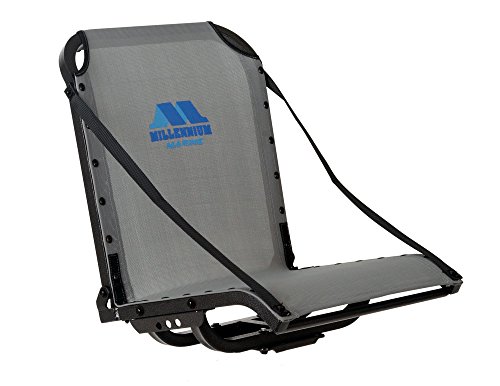
10 Best Fishing Chairs for Boats
A solid, mounted boat seat makes it easier to shoot and cast while sitting down, which keeps a small boat more stable.
Questions
What is the most important safety precaution when hunting from a boat?
Wear a properly fitted, USCG-approved life jacket the entire time you’re on the water. Most fatal boat hunting accidents involve a small boat capsizing or swamping in cold water, often with the victim not wearing a life jacket. Cold shock can leave you unable to grab or put on a jacket after you fall in.
Can you shoot from a moving boat?
Generally no. Federal rules for migratory game birds ban shooting from a motorboat unless the motor is off and the boat has stopped moving. Many states have additional rules. For safety, always keep firearms unloaded with the action open while the boat is moving.
Should you stand up to shoot from a boat?
It’s safer to shoot sitting down, especially in a small boat, canoe or kayak. Standing raises your center of gravity, and recoil or a quick swing can tip you or the boat. If anyone stands, it should be only one person at a time in a stable boat.
What should you do if your boat capsizes in cold water?
Focus on controlling your breathing for the first minute, then use your limited muscle time to reach the boat and climb onto it or hold on. Stay with the boat instead of swimming for shore, signal for help, and use the HELP or huddle position if you’re stuck in the water.
Do I need a boater education card to hunt from a boat?
It depends on your state and often on your age and the boat’s horsepower. Many states require boater education for younger operators, and some require it for most operators. Check your state boating agency’s rules, and consider taking the course anyway because it covers navigation rules and emergency procedures.
Update log
Rewritten and expanded: clearer answers, 7 visual summaries, FAQ and related gear guides.


