
Fishing › Guides › Loading a Kayak on an SUV
To load a kayak onto an SUV without scratching it, pad any spot where the boat could touch the car with a thick blanket. Rest the bow on the rear crossbar, then lift the stern and slide the kayak forward onto the rack. Put a towel or mat on the ground where the stern sits so the hull never drags on gravel or asphalt, and hold the boat down with padded cam straps plus bow and stern lines.

Key takeaways
- Pad the car first. A thick blanket over the rear hatch edge or the side of the roof keeps the hull from scuffing paint and glass.
- Set the bow on a crossbar first, then lift the stern. That way you never hold the kayak’s full weight overhead.
- Keep the hull off bare pavement with a towel or rubber mat, and never drag the kayak across gravel.
- Use cam straps over the crossbars plus bow and stern lines. Check them again after the first 5 to 10 minutes of driving.
In this guide
- Where the Scratches Actually Come From
- What You Need Before You Start
- Check Your Rack, Weight Limits, and Kayak Size
- Step-by-Step: Loading a Kayak Onto an SUV by Yourself
- Strapping It Down Without Damaging the Hull
- Unloading the Kayak at the Lake
- Common Mistakes That Scratch Cars and Hulls
- Road Safety, Overhang Rules, and Seasonal Tips
Where the Scratches Actually Come From
Most damage happens in the few seconds when the kayak is half on and half off the car. The bow drags across the rear hatch, the hull slides down a door or window, or the stern grinds into gravel while you reposition. Once the boat is sitting on the rack, very little goes wrong.
There are two things to protect. Your SUV’s paint, glass, and roof edges scratch easily, especially from a plastic hull with sand stuck to it. The kayak’s hull suffers too. Polyethylene boats get gouged on asphalt and rocks, and composite boats can chip or crack.
The fix is simple. Put padding between the kayak and the car wherever they could touch, keep the hull off rough ground, and use a loading order that never makes you hold the full boat over your head. You don’t need a lift-assist system to do this alone, though they help with heavy fishing kayaks.
A sit-on-top fishing kayak with a seat, rod holders, and a crate can be awkward to lift. Before you load, strip off anything removable, like the seat, crate, rods, and anchor. A lighter boat with fewer snag points is easier to handle and less likely to scrape anything.

Tip: Rinse or wipe sand and grit off the hull before loading. A gritty hull sliding across a blanket or crossbar acts like sandpaper on both the boat and the car.
What You Need Before You Start
You can do this with things you probably already have at home. The essentials are a large blanket for the car, a towel or mat for the ground, and a step stool so you can reach the straps.
A moving blanket works better than a bath towel on the car because it’s thicker and stays put. Lay it over the rear edge of the roof and the top of the hatch, or over the side of the roof if you load from the side. Tuck one edge under the crossbar or roof rail so it doesn’t slide when the kayak moves across it.
On the ground, a rubber mat grips better than a towel and won’t blow away. Either one keeps the stern off the pavement while you lift.
A step stool matters more on an SUV than on a car. You need to reach the middle of the roof to center the boat and throw straps over, and climbing on tires or door sills is how people slip and dent things.

Solo loading kit
- Thick blanket or moving pad for the car
- Towel or rubber mat for the ground
- Sturdy step stool
- Two cam buckle straps sized for your rack
- Bow and stern tie-down lines
- Crossbar pads, saddles, or J-cradles (recommended)
- Red or orange flag if the kayak sticks out far past the rear bumper
Nice-to-have upgrades
Kayak saddles, J-cradles, or foam crossbar pads spread the load and keep the hull from sitting on bare metal. A rear roller or load-assist bar that mounts on the back crossbar makes solo loading much easier for kayaks over about 60 pounds.
Check Your Rack, Weight Limits, and Kayak Size
Before loading anything, find the roof load rating for your SUV and your rack. It’s in the owner’s manual and the rack maker’s instructions. Your real limit is whichever number is lower, and it has to cover the rack, the kayak, and any gear you strap up there.
Factory side rails without crossbars aren’t enough by themselves. You need two crossbars, spaced as far apart as your rails allow, so the hull is supported in two places. Bars set close together let a long boat seesaw in crosswinds.
Kayak length and weight also decide whether solo roof loading makes sense. A 10-foot recreational kayak is easy for one person. A 12 to 14-foot fishing kayak with a wide, stable hull is often heavy enough that you should use a load-assist device, get a helper, or switch to a trailer or truck bed.

Typical kayak weights and the loading method that fits
| Kayak type | Typical weight range | Solo roof loading? |
|---|---|---|
| Recreational, 8 to 10 ft | About 35 to 50 lb | Yes, with the blanket method |
| Day touring, 12 to 14 ft | About 45 to 60 lb | Yes, with padding and care |
| Sit-on-top fishing, 10 to 12 ft | About 55 to 80 lb | Possible, a rear roller helps a lot |
| Sit-on-top fishing, 12 to 14 ft | About 70 to 120 lb | Use a load assist, a helper, or a trailer |
| Pedal or motorized fishing kayak | Often 100 lb or more | Trailer or truck bed is usually better |
Step-by-Step: Loading a Kayak Onto an SUV by Yourself
This method works by never asking you to lift the whole kayak at once. The rear crossbar takes the weight of the bow while you lift only the stern, so you’re handling about half the boat at any moment.
Most people load from the back of the SUV because the hatch gives a clean, straight line onto the rack. If the rear crossbar sits too far forward, or you have a rear-mounted bike rack or spare tire, loading from the side corner works the same way. Just drape the blanket over the side of the roof and the top of the rear door and window.

Solo rear-load method
- Pad the carDrape the blanket over the rear roof edge and top of the hatch, and tuck it under the rear crossbar so it can’t slide.
- Set the ground padPut the towel or mat where the stern will rest, then line the kayak up straight behind the SUV with the bow facing the car.
- Lift the bow onto the barPick up the bow handle and set the bow on the padded rear crossbar, letting the stern rest on the mat.
- Lift and push the sternWalk to the stern, lift by the handle, and push the kayak forward smoothly until the bow passes over the front crossbar.
- Center the boatUse the step stool to slide the kayak side to side until it’s centered between the crossbars and sitting evenly in its pads or cradles.
- Remove the blanketPull the blanket out before strapping so it doesn’t flap on the highway or trap grit under the hull.
Which way should the kayak face?
For sit-on-top kayaks, many paddlers carry the boat hull-down in saddles or hull-up on padded bars, depending on what the manufacturer recommends. Plastic hulls can dent if they sit on narrow bars for long periods, especially in hot sun, so follow the kayak maker’s guidance and use wide pads or cradles.
Strapping It Down Without Damaging the Hull
Use cam buckle straps, usually 1-inch webbing, looped around each crossbar and over the kayak. Pull them snug by hand until the boat doesn’t shift when you push on it. That’s tight enough.
Skip ratchet straps for kayaks. It’s easy to crank them hard enough to deform a plastic hull or crack a composite one, and a dented hull can affect how the boat tracks on the water.
Make sure the metal buckle isn’t sitting on the hull or the roof paint. Position it against the side of the kayak near the crossbar, or wrap it in a small cloth. Put a half twist in each strap where it spans open air. The twist stops the loud humming that flat straps make at highway speed.
Add bow and stern lines from the kayak’s grab handles down to tow hooks, under-hood loops, or hood anchor straps. They keep the boat from lifting or swinging in crosswinds or under hard braking. Many kayak makers and rack makers recommend them for any highway driving.

Safety note: Pull over and recheck every strap after the first 5 to 10 minutes of driving. Webbing settles and stretches a little, and a strap that felt tight in the driveway can loosen once the boat shifts.
Unloading the Kayak at the Lake
Unloading is the same process in reverse. The biggest mistake is parking somewhere without enough room, so leave at least a full kayak length of clear space behind or beside your SUV before you start.
When you arrive, check the ground behind the vehicle. Gravel, broken shells, and rough concrete ramps chew up hulls quickly. That’s when the towel or mat earns its spot in the car.
Since the boat comes down stern first onto the mat, you control it the whole way. If you’re tired after a long day of paddling, take your time on this step. Most dropped kayaks happen on the way down, not the way up.
At the end of the day, a wet hull picks up sand and mud fast. Rinse or wipe the kayak before loading it back on the roof, and shake out the blanket so trapped grit doesn’t scratch the car on the next trip. Coil your straps neatly so they’re untangled and ready to go.

Unloading in reverse
- Prep the spotLay the blanket back over the rear roof edge and put the mat where the stern will land.
- Release the linesUndo the bow and stern lines first, then the crossbar straps, and toss the straps clear of the boat.
- Slide it backStand at the rear, grab the stern handle, and pull the kayak back until the bow rests on the padded rear crossbar.
- Lower the sternEase the stern down onto the mat, keeping the bow resting on the bar.
- Bring the bow downWalk to the bow, lift it off the bar, and lower it gently to the ground or onto a cart.
Common Mistakes That Scratch Cars and Hulls
Most scratches come from the same few habits. Fix these and the blanket method stays damage-free for years.
The big one is dragging. It’s tempting to slide a heavy fishing kayak across a parking lot rather than lift it, but drag marks on the keel wear through faster than you’d expect. A kayak cart saves your hull, and it makes the walk to the launch much easier.
Wind is another sneaky problem. A long kayak acts like a sail, and one gust while the bow is on the bar can swing the stern into the side of the car. On windy days, face the bow into the wind and keep a firm grip on the stern handle.
Rushing is the last big one. When a crowd is waiting at the ramp, it’s easy to skip the blanket or toss straps over carelessly. Taking an extra minute to pad the car and set the mat protects both your paint and your boat.

Mistakes and how to avoid them
| Mistake | What it damages | Fix |
|---|---|---|
| Sliding the hull across bare roof or hatch | Paint, glass, hatch spoiler | Pad with a thick blanket tucked under the bar |
| Dragging the kayak on gravel | Hull keel and stern | Use a mat on the ground and a kayak cart |
| Overtightening ratchet straps | Hull shape, composite layup | Use cam straps, hand-tight only |
| Buckle resting on the roof | Roof paint | Set buckle against the kayak side near the bar |
| Loading with gear still attached | Car paint and the gear itself | Remove seat, crate, rods, and anchor first |
| Loading in strong wind without a plan | Doors and side panels | Face into the wind and keep a hand on the stern |
Road Safety, Overhang Rules, and Seasonal Tips
Long kayaks often stick out past the rear bumper. Many US states require a red or orange flag on loads that extend a certain distance past the vehicle, often around 4 feet, and some require a light at night. The rules vary by state, so check your local regulations before a long trip.
Drive a little slower than usual, especially on the highway and in gusty crosswinds. A roof-mounted kayak raises your SUV’s center of gravity and catches wind. Watch for low garage roofs, drive-throughs, and parking structures, since this is one of the most common ways people damage both the boat and the rack.
In summer, a plastic kayak strapped tightly to the roof in hot sun can soften and dent where it touches the bars. Use wide saddles or cradles, and loosen the straps slightly if the boat will sit parked for hours. In cold weather, plastic gets stiffer and a little more brittle, and frost on the roof makes a blanket slide. Wipe the roof dry and handle the boat gently.

Tip: Do a practice load and unload in your driveway before your first trip. Running through the steps once without a crowd at the ramp makes the real thing much smoother.
When the roof just isn’t worth it
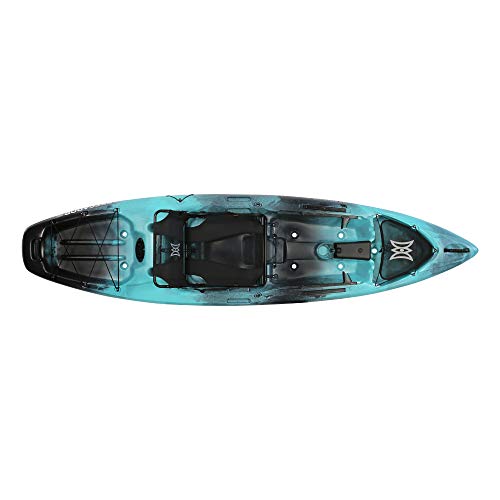
If your kayak is heavy, you fish alone often, or you have a bad back, a trailer or truck bed may be the smarter choice. Lighter boats are easier to car-top, and if you’re still shopping, our guide to the best 10-foot kayaks for fishing covers boats that are easy for one person to handle.
Gear that helps
Our guide
9 Best 10-Foot Kayaks for Fishing
Shorter, lighter fishing kayaks are much easier to car-top by yourself without scraping the SUV.

Our guide
6 Best Fishing Kayaks for Beginners
Beginner-friendly kayaks tend to be manageable in weight and size, which makes solo roof loading realistic.
Our guide
6 Best Kayak Accessories for Fishing
Covers add-ons that help with transport and setup at the launch.
Questions
Can one person load a kayak onto an SUV?
Yes, for most kayaks up to about 60 to 70 pounds. Rest the bow on the padded rear crossbar first, then lift the stern and slide the boat forward. That way you never hold its full weight overhead. Heavier fishing kayaks usually need a rear roller, a load assist, or a helper.
What can I use instead of a blanket to protect my car?
A moving pad, a thick beach towel, or a yoga mat all work. Some paddlers use a suction-cup rear loader or a rack-mounted roller instead. Whatever you use, anchor it under a crossbar so it doesn’t slide when the kayak moves over it.
Should a kayak go on the roof right side up or upside down?
It depends on the kayak and your rack. Saddles and J-cradles are usually designed for the hull-down position, while some paddlers carry sit-on-tops hull-up on padded bars. Check the kayak maker’s recommendation, especially for plastic boats that can dent in heat.
Do I really need bow and stern lines?
They’re strongly recommended for highway driving and windy conditions. They keep the bow from lifting and the boat from swinging if a crossbar strap loosens. Many kayak and rack makers call for them, and they’re cheap insurance against a boat coming off at speed.
How tight should kayak straps be?
Snug enough that the kayak doesn’t shift when you push it side to side, but not so tight that the hull flexes or dents. Hand-tight cam straps are the right tool. Recheck them after the first few minutes of driving and at each stop.
Update log
Rewritten and expanded: clearer answers, 8 visual summaries, FAQ and related gear guides.


