
Fishing › Guides › Is Fly Fishing Hard?
Fly fishing is not hard to start. Most people can learn a basic cast in an afternoon, especially with a short lesson. It takes longer to catch fish reliably, because you also need to read water, pick flies and present them naturally, and that usually comes from a season or more of regular trips.
Key takeaways
- Casting is about timing, not strength. A short pause to let the line straighten fixes most beginner problems.
- Most trout are hooked within 30 to 40 feet, so long casts are not needed to start catching fish.
- Reading water, choosing flies and getting a drag-free drift take longer to learn than casting does.
- A lesson or a guided trip on your first day can save you weeks of fixing bad habits on your own.
In this guide
- So, Is Fly Fishing Actually Hard?
- Fly Fishing Basics: How It Differs From Spin Fishing
- Learning to Cast: The Part Everyone Worries About
- Reading the Water and Finding Fish
- Why Fly Fishing Is Easier Than You Think
- Mistakes Beginners Make (and How to Avoid Them)
- Safety, Licenses and Seasonal Differences
So, Is Fly Fishing Actually Hard?
The honest answer is that fly fishing is easy to start and takes a long time to master. Plenty of first-timers make a usable cast within an hour of instruction. The challenge is everything that comes after the cast: knowing where fish hold, what they are eating and how to drift a fly so it looks natural.
Fly fishing feels different because of how the fly gets to the fish. With a spinning rod, the weight of the lure pulls line off the reel. A fly weighs almost nothing, so the heavy fly line carries it, and you have to cast the line itself. That calls for a different motion, and it is the part that looks intimidating from the bank.
Most people who quit early do so because of frustration, not difficulty. They practice alone, build bad habits, tangle their leader and give up. If you treat the first few outings as practice, get basic instruction, and fish easy water, the learning curve is much gentler than its reputation suggests.

How long the main fly fishing skills usually take to learn
| Skill | Difficulty | Typical time to get comfortable |
|---|---|---|
| Basic overhead cast | Low to moderate | One afternoon to a few practice sessions |
| Tying a clinch knot | Low | A few minutes of practice |
| Reading water | Moderate | Several outings |
| Drag-free drift and mending | Moderate | A season of regular fishing |
| Matching the hatch | Moderate to high | Ongoing, it keeps improving for years |
| Long or windy casts | High | Many seasons, and often not needed |
Fly Fishing Basics: How It Differs From Spin Fishing
Fly anglers use artificial flies, tied from feathers, fur, thread and synthetic materials, to imitate insects, baitfish, crayfish and other food. A fly outfit has four main parts: the rod, the reel, the fly line, and a clear tapered leader that ends in a thinner section called tippet.
Here, the reel mostly just stores line. You strip line in by hand to retrieve the fly or take up slack, and only big fish go ‘on the reel.’ That is one of the biggest mental shifts for spin anglers.
Trout get most of the attention, but they are far from the only target. Bass, panfish, carp, pike, redfish, bonefish and many other species take flies in freshwater and saltwater. Bluegill in a local pond are one of the best places to learn, because they are common, close to shore and eager to bite.

Fly fishing vs. spin fishing for a beginner
| Factor | Fly fishing | Spin fishing |
|---|---|---|
| What gives the cast its weight | The fly line | The lure or sinker |
| Learning the cast | Takes practice | Learned in minutes |
| Best at | Imitating small insects on or near the surface | Covering water with lures and bait |
| Retrieve | Stripping line by hand | Turning the reel handle |
| Room needed behind you | Yes, for the backcast | Very little |
What a beginner outfit looks like
For most freshwater beginners, a 9-foot, 5-weight rod with weight-forward floating line is the standard all-around choice. It handles trout streams, ponds and small bass. Add a 7.5- or 9-foot leader in 4X or 5X, a few flies and nippers, and you are ready. Our guide to fly fishing gear for beginners covers starter kits in more detail.
Learning to Cast: The Part Everyone Worries About
Casting is about timing and smooth acceleration, not power. The rod loads (bends) as it moves line, then unloads to send it forward. If you go too fast, the line cracks like a whip and may snap the fly off. If you go too slow, the line falls in a pile.
A common teaching cue is the clock face. With your casting arm pointing to the side, the rod tip moves between about 10 o’clock in front and 1 o’clock behind. Keep your wrist mostly firm and move from the forearm and elbow, as if you were hammering a nail on the wall in front of you.
Practice on grass or open water with a piece of yarn tied to the leader instead of a hook. Start with 20 to 30 feet of line out. That range covers a lot of real fishing situations, and many trout are hooked within 30 to 40 feet. Long casts look impressive, but accuracy and a soft landing catch more fish.
The basic overhead cast
- Start lowLay about 20 to 30 feet of line straight on the grass or water in front of you, with the rod tip low.
- Lift and backcastLift the rod smoothly, then speed up and stop firmly around 1 o’clock so the line flies back behind you.
- PauseWait a beat while the line straightens behind you. This short pause is the step most beginners skip.
- Forward castPush the rod forward with steady acceleration and stop crisply around 10 o’clock.
- Follow throughLower the rod tip as the line unrolls and settles on the water, then trap the line under a finger of your rod hand.
Common casting mistakes
The usual problems are rushing the backcast, breaking the wrist so the rod drops too far back, and using too much force. All of these cause wide, sloppy loops or tangles. Watch your backcast over your shoulder while practicing. Once you see the line straighten behind you, the timing starts to make sense.
Reading the Water and Finding Fish
Once you can cast, your next skill is knowing where to put the fly. In rivers and streams, fish want three things: shelter from strong current, protection from predators, and a steady supply of food delivered to them. Spots that offer all three hold fish.
Look for seams, which are the lines where fast and slow currents meet. Fish rest in the slower water and dart into the faster lane to grab drifting insects. Riffles, the shallow and bumpy stretches, hold active feeders. Deeper pools, the water behind big rocks, undercut banks, and fallen trees are prime shelter.
In lakes and ponds, check drop-offs, weed edges, inlets, shaded banks and docks. Early and late in the day, fish often cruise shallower water. During the midday heat, they usually go deeper.

Where to look for fish on a stream
- Seams where fast and slow currents meet
- The head and tail of riffles
- Slow water behind and in front of boulders
- Undercut banks and overhanging brush
- Deep pools, especially in hot or cold weather
- Fish rising or rings on the surface
Getting a natural drift
A real insect floats at the speed of the current. When your line sits in faster water than your fly, it drags the fly and makes it look wrong. Mending is the fix: you flip a loop of line upstream so the fly drifts freely. It takes practice, but it often matters more than casting distance.
Why Fly Fishing Is Easier Than You Think
Several things make the start much easier than it looks. First, the gear list is short. Beyond a rod, reel, line and leader, you mainly need a handful of flies, nippers, and one good knot. The improved clinch knot handles tying flies to tippet for most beginners, and it takes a few minutes to learn.
Second, you do not have to start on a technical trout river. Ponds full of panfish forgive bad casts and give you lots of bites, which builds confidence fast. Stocked trout waters are another easy place to begin.
Third, you can skip the casting for some methods. Nymphing with an indicator often needs only a short lob and a good drift. Fishing small streams for wild trout is mostly short, accurate casts.
Finally, help is easy to find. Many fly shops, local clubs and conservation groups offer free or low-cost casting clinics, and a half-day guided trip is one of the fastest ways to learn.

Tip: Spend your first outing on a pond with bluegill or other sunfish. They bite readily and forgive messy casts, so you can work on your stroke while still catching fish.
Picking your first flies
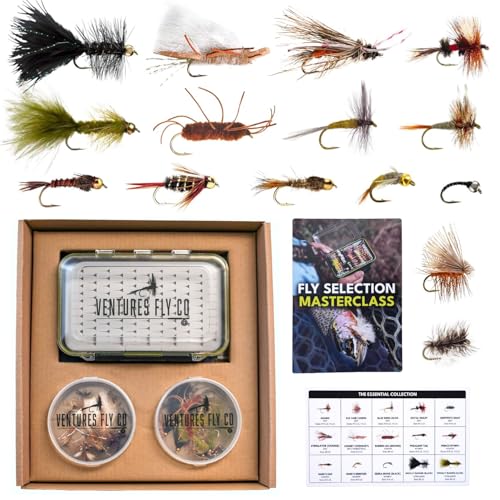
You do not need hundreds of patterns. A few proven dry flies, nymphs and a streamer like a Woolly Bugger cover a lot of situations. See our picks for fishing flies for trout for a starter selection.
Mistakes Beginners Make (and How to Avoid Them)
Buying gear that does not match is a classic one. The rod, reel and line weight should all match. A 5-weight rod needs 5-weight line. Many beginners do well with a matched outfit from one brand so this is already sorted out.
Using too much line is another. Beginners often strip off 50 feet and lose control. Shorter casts give you better accuracy, better drifts and better hooksets.
Setting the hook too hard or too late loses lots of fish. With dry flies, wait for the fish to close its mouth, then lift the rod smoothly. With nymphs, set at any pause or twitch of the indicator.
Skipping knots practice leads to lost flies and lost fish. Wet the knot before you tighten it, and trim tag ends close. Also, check your tippet for nicks and wind knots often.
Finally, people spook fish. Trout see well and feel vibration. Approach slowly, stay low, wear muted colors, and fish the close water before you wade into it.
Safety, Licenses and Seasonal Differences
Almost every US state requires a fishing license for adults, and some waters have extra rules such as fly-only stretches, catch-and-release areas, barbless hook rules or seasonal closures. Some states also restrict felt-soled wading boots to slow the spread of invasive species. Rules vary a lot, so check your state wildlife agency’s regulations before every trip.
Wading is the main safety risk. River rocks are slippery, and current is stronger than it looks. Wear a wading belt cinched tight over your waders, use a wading staff in unfamiliar water, and never wade deeper than your thighs in moving current as a beginner. If you need waders, our roundup of waders for fly fishing covers good options.
Always wear sunglasses and a hat. A fly on a bad cast can hit your face, and polarized lenses also help you see fish below the surface.
Safety note: Never wade above your knees in fast current until you know the river. If you fall, roll onto your back with your feet pointed downstream and work toward the shore instead of trying to stand up in strong flow.
Seasons and regions
In much of the country, spring and fall are the most forgiving seasons for trout, with active fish and good insect hatches. In summer heat, fish early and late and avoid stressing trout when water gets very warm. Warmwater species like bass and panfish are easiest in late spring and summer. In the South and along the coasts, saltwater fly fishing can run year-round, but it usually calls for heavier rods and casting in wind.
Gear that helps

Our guide
10 Best Fly Fishing Gear for Beginners
Matched starter outfits take the guesswork out of choosing rod, reel and line weights.
Our guide
10 Best Fishing Flies for Trout
A small set of proven flies covers most beginner trout situations.

Our guide
9 Best Waders for Fly Fishing
Waders let you reach better water on cold streams and keep you comfortable through the season.
Questions
How long does it take to learn fly fishing?
Most people can make a basic cast after an afternoon of practice, especially with a lesson. Catching fish consistently usually takes a season of regular outings, because reading water and getting good drifts take time. Like any outdoor skill, you keep improving for years.
Is fly fishing harder than regular fishing?
Casting is harder to learn than with a spinning rod, and the rest of the sport asks more of you. However, fly gear is often better at fooling fish that are feeding on small insects. Many anglers use both methods depending on conditions.
What is the best fly rod for a beginner?
A 9-foot, 5-weight rod with weight-forward floating line is the classic all-around choice for trout and small bass. It is versatile enough for streams, rivers and ponds. If you mostly fish tiny creeks or panfish ponds, a shorter 3- or 4-weight is also fun.
Can you teach yourself to fly fish?
Yes, many people do with videos, books and practice on grass. Even so, a single casting lesson or guided trip can catch bad habits early and speed things up. Fly shops and local clubs often run beginner clinics.
Can you fly fish for fish other than trout?
Absolutely. Bass, panfish, carp, pike and many saltwater species all eat flies. Panfish in ponds are an especially good place for beginners to practice and build confidence.
Update log
Rewritten and expanded: clearer answers, 7 visual summaries, FAQ and related gear guides.


